A running series on how Weavian works in practice — cloud anchoring, traffic classification, predictive path selection, and the security model that falls out of all of it.
Five posts. Each one goes deep on one layer of the stack.
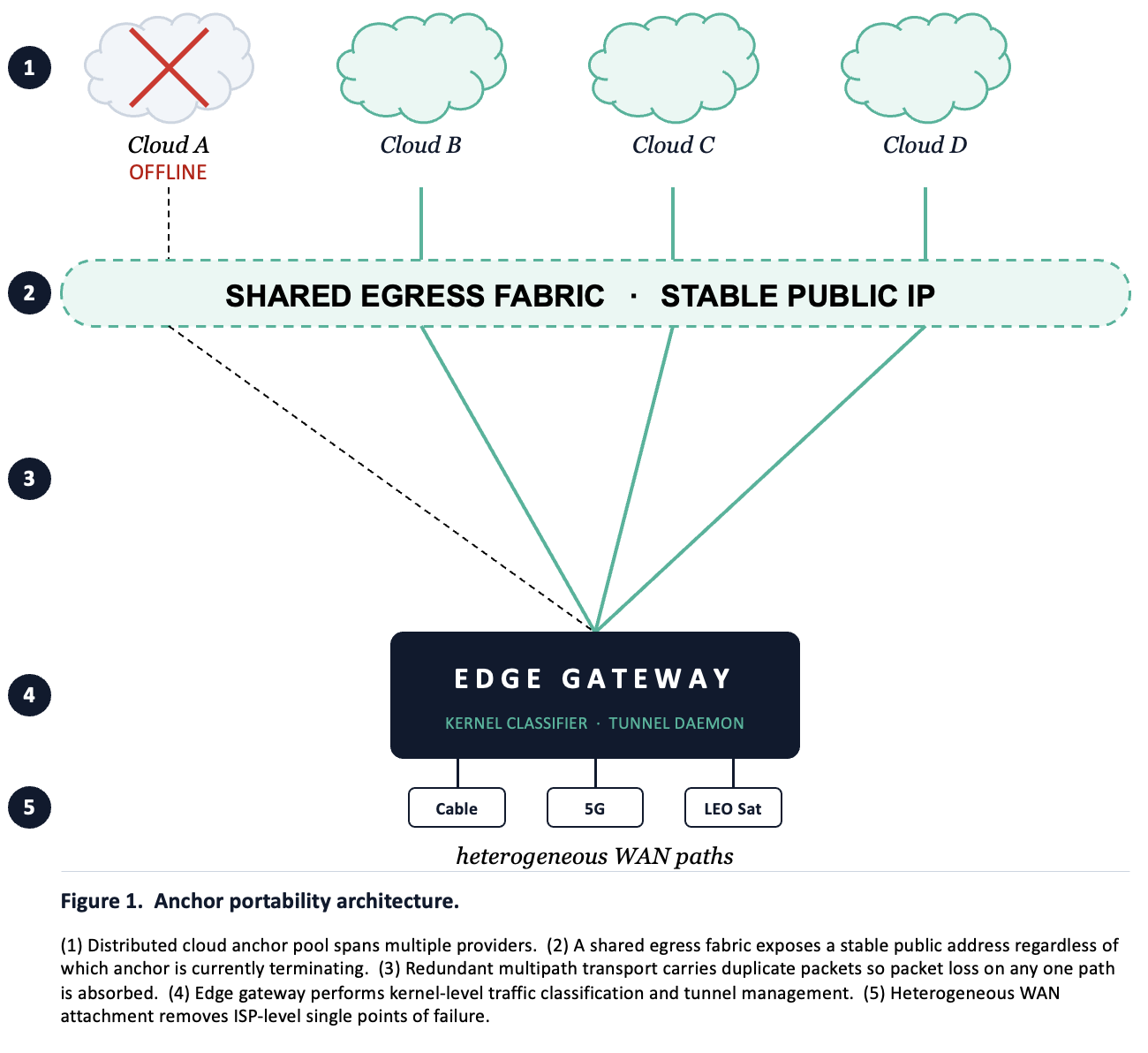
Multi-cloud anchor portability, sub-second failover, stable egress IP.
Shifting a percentage of traffic to a different path, or rerouting one class of traffic while leaving the rest alone — real time, or planned.
Spotting link degradation before it actually happens. Failover that starts before the failure does.
Telling sessions apart in real time, in under a millisecond, without inspecting payloads. Each routed according to what it actually needs.
DDoS absorption, IP rotation, load balancing across paths. Things you get for free once portable anchors and intelligent routing live in the same stack.